A technique
A simple tool to make ideation sessions a little more fun and a little more fruitful.

Brainstorming or ideation sessions can sometimes be tough if everyone has different levels of experience with innovation or creative thinking. Everyone is capable of generating ideas, but some people need a moment or two to get up to speed. And sometimes you need teams to always be generating new and crazy ideas.
The Impossible Problem
This is an ideation warm-up game.
It’s deceptively simple in that all you need to participate is 5 minutes, 3 post-it notes, and a crazy unrealistic problem.
The rules.
Each person has 5 minutes to think up 3 solutions to a problem that is impossible to solve.
Sounds pretty straight forward right?
The problem needs to be impossible. Impractical, unrealistic, and totally unachievable in the real world.
There are two key components to creating an impossible problem.
First, pick a goal that is almost impossible to achieve with today’s technology.
Then give it a ridiculous timeline. The tightest.
So how do you solve a problem that’s impossible?
Well, you don’t need the solution to be achievable, practical, or even realistic. And they're better when they're totally silly, off the wall, and ridiculous.
Why? Well, the aim of this exercise is to stretch your lateral thinking. By removing the obstacles of the real world you’re able to look at the challenge in different ways. And you can add to that, the objective of trying to amuse your colleagues to make things more interesting.
A quick example
We could set a fun problem like: How could we get a billboard on the moon, visible from the Earth, by next week?
Now, how the hell would you solve it? Suspend disbelief and just throw anything at it!
Here are my 3 stupid ideas…
Slam a whole bunch of nuclear weapons into the moon, but strategically orientated in the shape of a brand logo…
Make a big coloured mirror to reflect the Sun’s rays onto the moon in the shape of your billboard message…
Amass the world’s largest swarm of drones, shoot them up to the moon on a couple of Elon’s rockets and program them to continuously spell out your ad message on the moon
As you can tell these are all silly, improbable, and probably disastrous ideas but that’s not really the point. The aim is to have answers, quickly. Ignore reality and plausibility - go nuts!
Does it work?
The results of these games are a whole bunch of random thoughts that really don’t amount to anything, but the aim here is a warm, stretched, and laterally thinking brain that’s no longer being restricted by the challenges of every day. Brainstorming meetings after this kind of warmup usually become a little more open and fluid, ideas come a little quicker, and thoughts are a little more divergent because you’ve set the tone of speed, flexibility, and reduced pressure through this little warmup.
A team unlock
Once upon a time, I used to lead a very small team of creatives in a very small office of a very large brand consultancy. As a new office with a small team, expectations on output were a little more extreme in comparison to a large team in an established office – we had to prove ourselves and we had to justify those enormous fees that networked brand consultancies love to charge… which means performing at a very high level very quickly.
Thankfully I was fortunate to work with some of the best designers I’d ever worked with. However, we had a lot to do and burnout was always just around the corner.
When I was shown this technique at a workshop I was instantly in love with it. I had high hopes that it just might be a fast and easy way to build a creative culture within the office. So at the next morning's standup meeting, I introduced the idea to the whole group - creatives, suits, and the office admin - as a fun thing to do every day, to warm up brains first thing in the morning. Some people were into it, others took some cajoling, but we developed a habit of warming up every morning after we’d whipped around the team’s tasks for the day. Occasionally there'd be a grumble but what I found was that over time, everyone in the business felt empowered to come up with ideas for every brief. And the ideas were good - we pinpointed quickly how to have an idea, how to come up with one quickly, and also what a good idea looks like. The morning warmup helped foster a culture of always-on creativity - something really essential when you’re trying to be small, fast, and efficient. For the experienced creatives, they found ideation sessions a lower strain on their mental load and they weren't afraid to keep thinking and rethinking the work as they started to bring these ideas to life, all without burning out.
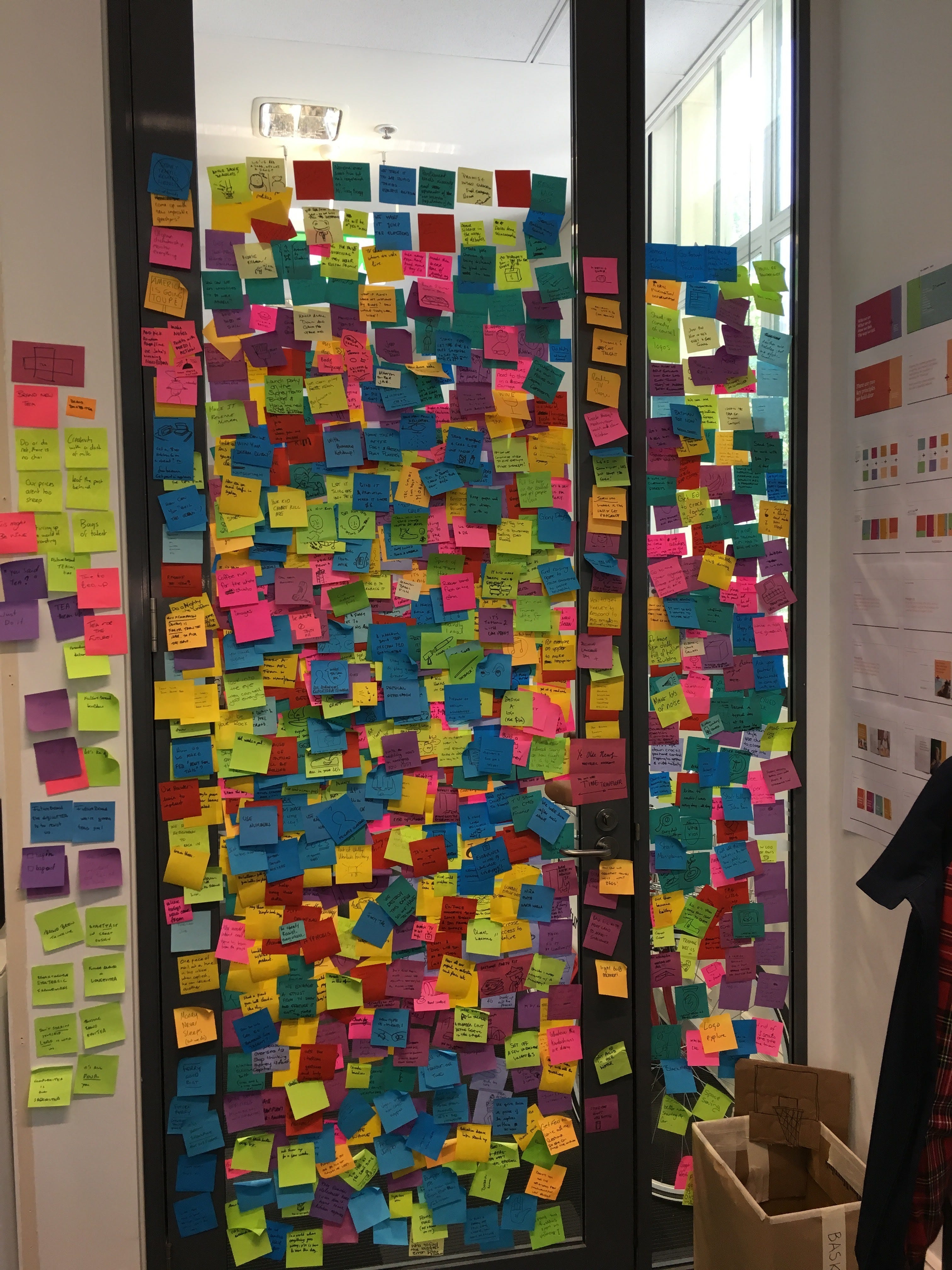
The back of the office door a few months after starting the ritual
So take a chance and throw this technique into the mix of tools you share at your next brainstorming session, it might help you get to better ideas, or at the very least you’ll generate a lot more ideas a lot faster.
If you're interested in other ideation techniques, here’s a good resource for some other tools you could try as well
https://www.ideou.com/pages/brainstorming-resources
https://innovationlab.net/blog/9-best-exercises-to-spark-creativity-in-ideation
3 other things that might be interesting
That new Russian McDonalds logo...
Jack and Coke are officially together...
Looks like Netflix are making a Squid Game for real (minus the murder...)